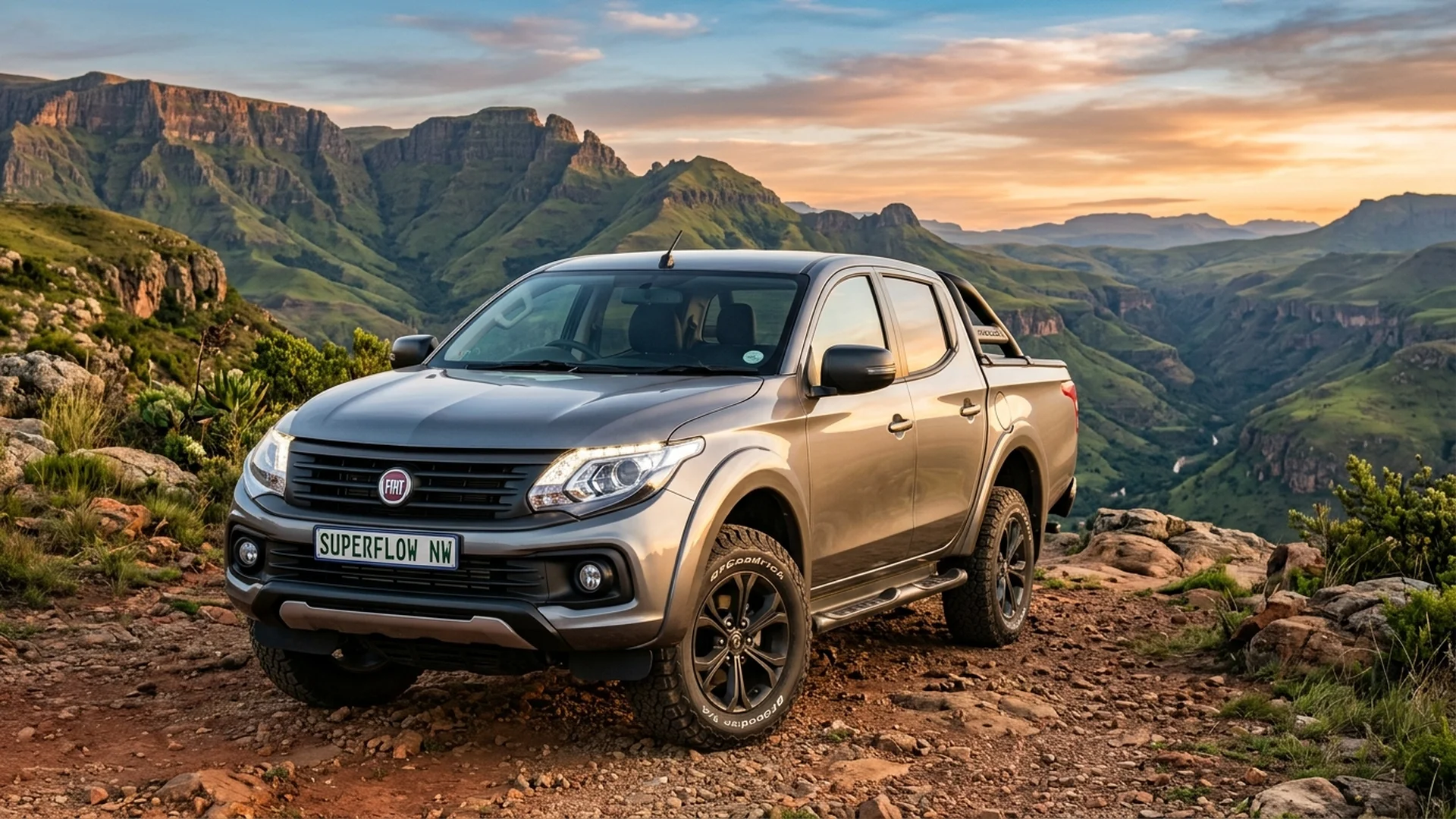
The Fiat Fullback (2017–Present) is one of the most underrated, value-packed double cabs in South Africa. While it wears an Italian Fiat badge, it is built on 100% Japanese Mitsubishi Triton (5th-gen) underpinnings, powered by the renowned 2.4L 4N15 MIVEC all-aluminium turbodiesel. In standard trim, the popular entry 112kW (150hp / 380Nm) model suffers from noticeable low-RPM turbo hesitation and factory software detuning. With a custom Superflow Performance Remap, both the 112kW and 134kW models unleash an extraordinary 153 kW (205hp) and a monumental 500 Nm of torque — delivering up to +120 Nm of heavy-duty pulling muscle! This puts the Fullback squarely in Toyota Hilux 2.8 GD-6 and Ford Ranger Bi-Turbo territory at a fraction of the cost. For long-distance overland tourers and agricultural fleets, our specialized Economy Remap delivers 134kW / 440Nm (or 142kW / 465Nm) while smoothing the torque curve and reducing diesel consumption. All remaps are custom road-calibrated with live OBD datalogging under real load, delivered nationwide to your doorstep.
In a South African double cab market completely obsessed with the Toyota Hilux, Ford Ranger, and Isuzu D-Max, it is easy to overlook alternatives that don't carry one of the "big three" nameplates. But knowledgeable bakkie buyers and off-roaders know a secret: the Fiat Fullback (2017–Present) is quite literally a Japanese warrior dressed in Italian workwear.
When Fiat Chrysler Automobiles (FCA) entered the 1-ton bakkie segment in South Africa, they didn't try to reinvent the wheel. Instead, they formed a manufacturing alliance with Mitsubishi. Every single Fiat Fullback rolling off the assembly line in Laem Chabang, Thailand was built alongside the venerable Mitsubishi Triton, sharing its reinforced ladder-frame chassis, suspension geometry, Super Select 4WD system, and brilliant powertrain.
Yet, despite boasting bulletproof Japanese reliability and exceptional off-road capability, many Fullbacks left the showroom floor with their true potential choked by conservative factory software. Here is why the Fullback is secretly a 500Nm powerhouse waiting to be awakened.
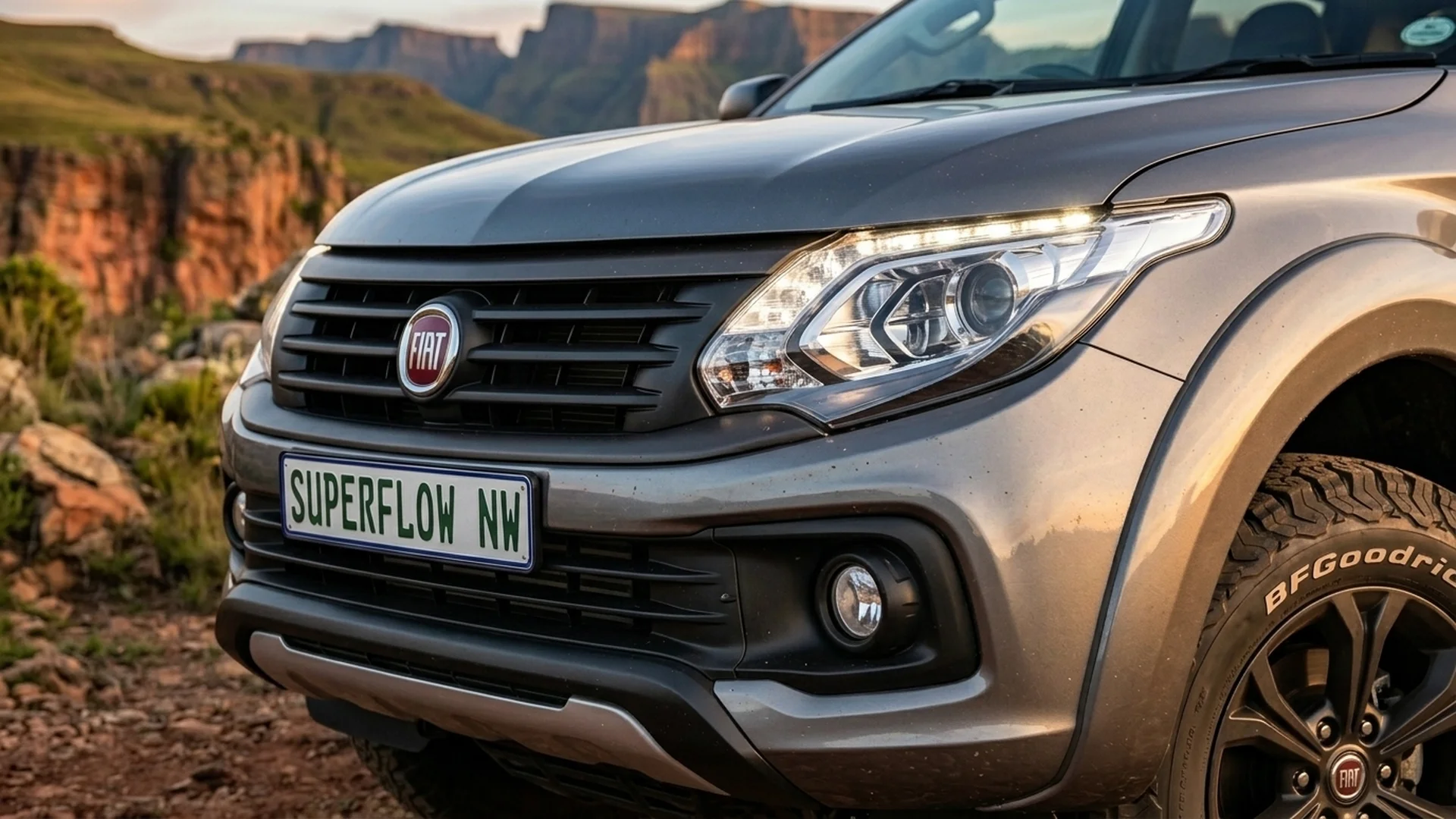
Under the Hood: The Mitsubishi 4N15 2.4L MIVEC Engine
At the mechanical core of the Fiat Fullback sits Mitsubishi's celebrated 4N15 DOHC 16-valve 2.4-litre turbodiesel. When it was launched, this engine was a technological masterpiece in the bakkie segment:
- All-Aluminium Cylinder Block: Rather than a heavy cast-iron lump, the 4N15 uses a lightweight aluminium die-cast block with steel cylinder liners, saving over 30kg over the front axle and drastically sharpening steering agility on dirt roads.
- MIVEC Variable Valve Timing: This was one of the first production turbodiesel engines in the world to feature variable valve timing on the intake camshaft, optimizing airflow across both low-RPM spool and top-end pulling.
- Ultra-Low 15.5:1 Compression Ratio: By reducing the compression ratio, Mitsubishi lowered combustion chamber peak pressures and temperatures, allowing the engine to run higher turbo boost levels safely without thermal distress.
- Variable Geometry Turbocharger (VGT): A responsive turbine that adjusts vane angles according to exhaust gas velocity.
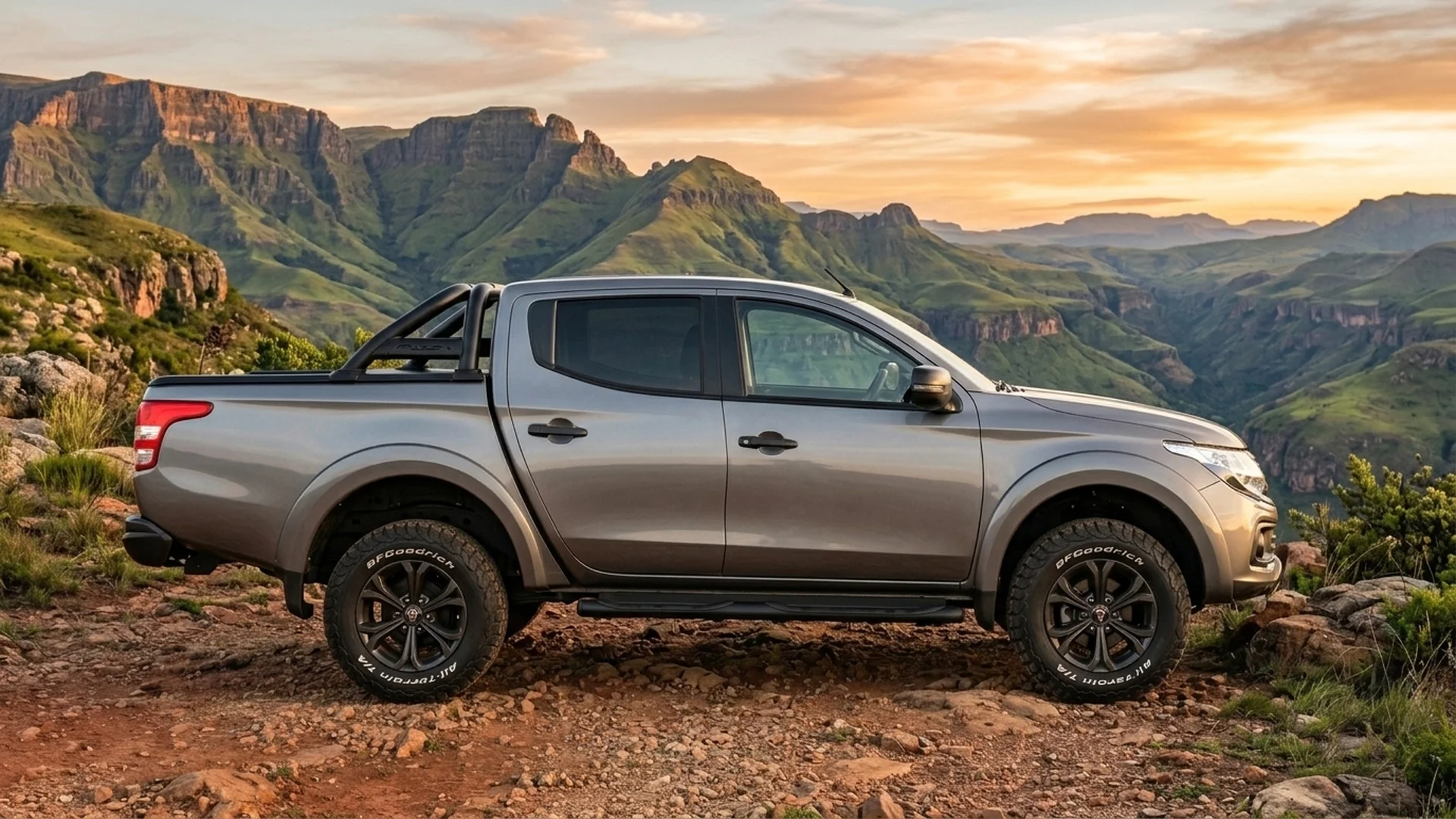
Verified Power & Torque Gains: Unlocking 500 Nm
Because the 4N15 engine possesses such exceptional mechanical strength and low thermal stress, an ECU recalibration delivers massive performance improvements without sacrificing engine longevity.
At Superflow Performance, our calibrations are verified directly against vehicle architectures. Here are the verified figures for the Fiat Fullback range:
Fiat Fullback 2.4 (112 kW)
Fiat Fullback 2.4 (134 kW)
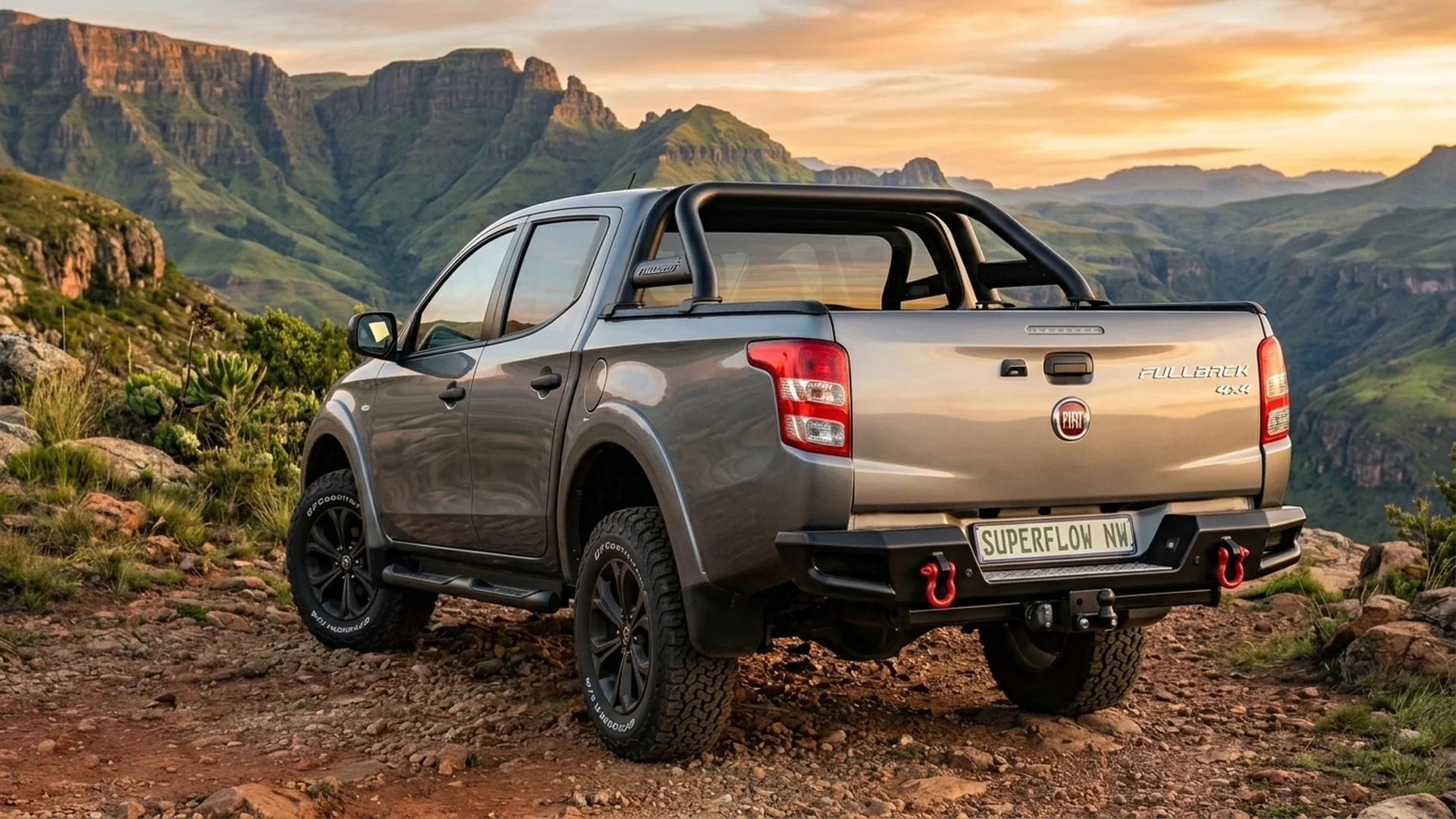
What 500 Nm of Torque Does Behind the Wheel
Gaining an extra +120 Nm of torque on the 112kW model and stepping up to a rounded 500 Nm of pulling force fundamentally changes how the Fullback behaves on South African roads and trails:
- Zero Off-Idle Bogging: In standard form, pulling away with a heavy payload or in thick Kalahari sand often feels sluggish until the turbo spools around 2,000 RPM. Our remap brings turbo boost on 350 RPM earlier, providing immediate throttle urgency from 1,400 RPM upward.
- Effortless 3.1-Ton Towing: Whether you're towing a Bush Lapa off-road caravan, a double-horsebox, or a heavy agricultural trailer, 500 Nm allows the vehicle to hold 5th and 6th gear effortlessly on highway inclines. No more annoying transmission hunting or screaming revs.
- Decisive Highway Overtaking: Moving from 80 km/h to 120 km/h on single-lane regional routes (like the N4, N12, or R510) happens in an instant. You step on the pedal, the 500 Nm torque wave kicks in, and you pass long ore trucks with total confidence and safety.
- Drivetrain Durability: The 5-speed automatic and 6-speed manual transmissions in the Fullback are heavy-duty Aisin-derived units rated comfortably beyond 500 Nm. Our remap maintains progressive torque delivery curves to preserve clutch packs and dual-mass flywheels.
Why Choose an Economy Remap for Your Fullback?
For high-mileage overland travelers, commercial bakkie operators, and farmers covering hundreds of kilometres every week, fuel expenses are a major consideration.
On our Economy Remap (134kW / 440Nm or 142kW / 465Nm), the calibration focuses on maximizing combustion efficiency and widening the low-to-mid RPM torque band:
- Because the engine generates 440 to 465 Nm of torque at cruising RPMs (1,600–2,000 RPM), the driver requires significantly less throttle angle to maintain highway cruising speeds.
- On open-road journeys (such as the long stretches of the Karoo, Free State, or North West), customers typically see real-world diesel savings of 0.8 to 1.3 litres per 100km.
- Over 40,000 km of driving per year, those savings add up to thousands of Rands kept in your wallet.
Beware Cheap Plug-in 'Tuning Boxes'
Because the Fiat Fullback shares its engine with the Mitsubishi Triton, the market is filled with generic plug-and-play "tuning chips" and sensor-fooler boxes. We strongly advise against them:
- The Cheat Box Trap: Cheap boxes simply splice into the common-rail fuel pressure sensor and trick the ECU into believing rail pressure is lower than it actually is. The ECU compensates by dangerously over-pressurizing the injection system.
- The Consequence: Premature injector nozzle erosion, melted piston crowns, high exhaust gas temperatures (EGTs), and choked diesel particulate filters (DPFs).
- The Superflow Remap Standard: We flash custom software directly into the factory Denso ECU. All Mitsubishi safety parameters — including oil temperature limiters, coolant overheat protection, and exhaust gas temperature failsafes — remain 100% active and protective.
Custom Road Calibrations: Tested Under Real Load
At Superflow Performance, we never rely on indoor static simulations. A bakkie that carries real payloads and tows across rugged South African terrain needs real-world calibration.
Every Fiat Fullback we calibrate undergoes Custom Road Calibrations with live OBD diagnostic datalogging. We connect professional diagnostic hardware to the OBD port and road-test the bakkie under real load across every gear. We log common-rail fuel pressure, manifold boost pressure, intake charge air temperatures, and lambda exhaust parameters in real time to ensure optimal power, clean combustion, and bulletproof long-term reliability.
Nationwide Mobile Tuning: We Come Directly to Your Door
Whether you're busy running a business, managing a farm, or simply don't want to spend half a Saturday sitting in a waiting room, our fully equipped mobile tuning units operate nationwide. We bring our diagnostic hardware, battery stabilization units, and ECU flashing equipment directly to your driveway, workplace, or farm.
The entire calibration and road-testing process takes approximately 1.5 to 2 hours, after which your Fiat Fullback is ready to hit the road with 500 Nm of effortless pulling power.
Frequently Asked Questions About Fiat Fullback Tuning
Is the Fiat Fullback really 100% identical to the Mitsubishi Triton?
Yes. Mechanically, structurally, and electronically, the Fiat Fullback is built on the exact same production line as the Mitsubishi Triton (L200) in Thailand. It uses the same 2.4L MIVEC 4N15 engine, Denso ECU, chassis, suspension, and 4WD running gear. Only the front grille styling, badges, and interior trim details are unique to Fiat.
Can the 112kW (150hp) model safely make 500 Nm?
Yes, absolutely. Because the 112kW model has the identical internal components, injectors, and turbocharger as the 134kW model, its factory rating is purely an electronic software restriction. When remapped, it achieves the exact same 153 kW (205hp) and 500 Nm as the high-output version.
Will remapping affect my bakkie's towing capability?
An ECU remap drastically improves towing capability. With 500 Nm of torque available from low RPMs, the Fullback pulls heavy loads up highway hills with far less throttle input, avoiding constant gear downshifts and keeping exhaust gas temperatures controlled.
Recommended Further Reading
Explore our other related bakkie tuning and maintenance guides:
- How Do I Improve My Fuel Consumption on My Vehicle? (Economy Remapping Guide)
- This is the Best Way to Keep Your Diesel Injectors Running Forever
- Toyota Hilux 2.8 GD-6 Remap Guide
- Why Your Overland Isuzu D-Max Feels Sluggish Under Load
Awaken Your Fiat Fullback Today
Don't let conservative factory software hold back South Africa's most underrated double cab. Transform your Fiat Fullback into a 205hp / 500Nm powerhouse with a custom Superflow Performance Remap, or cut long-distance diesel bills with an Economy Remap today.
Check Verified Power Gains for Your Fiat Fullback
Explore exact kilowatt, horsepower, and torque gains for your specific Fullback in our vehicle lookup database, or contact our mobile tuning team to book an on-site calibration at your location.