
The E150 Toyota Corolla D-4D (2007-2011) is one of the most reliable and fuel-efficient diesel passenger cars ever sold in South Africa. However, both the 1.4 D-4D and 2.0 D-4D engines leave the factory with heavily restricted ECU mapping. By performing a professional Stage 1 ECU remap, we safely unlock up to 370Nm of torque, eliminate sluggish turbo lag, and improve highway overtaking response—all while maintaining the Corolla's legendary reliability and fuel economy.
If you own an E150 generation Toyota Corolla D-4D (produced from 2007 to 2011) in South Africa, you already know what a workhorse it is. Whether it’s the ultra-efficient 1.4 D-4D or the punchier 2.0 D-4D, these cars are renowned for racking up hundreds of thousands of trouble-free kilometers. They are exceptionally reliable, economical, and comfortable daily drivers.
However, from a modern performance perspective, they can feel somewhat dated and sluggish. The throttle response is slow, the turbo takes time to spoil, and overtaking on the highway often requires dropping a gear or two. This is because Toyota dialed back the engine outputs from the factory to account for poor fuel quality and long service intervals across global markets.
Through custom ECU remapping (software calibration), Superflow Performance can unlock the hidden reserve power built into these common-rail diesel engines. Here is everything you need to know about a Stage 1 upgrade for your Corolla D-4D.
The Performance Figures: Stock vs. Tuned (Stage 1 & Economy)
Our custom software calibration recalibrates critical engine parameters—including fuel injection timing, boost pressure control, and torque limiters—completely within safe mechanical limits. No hardware modifications are required.
Corolla 2.0 D-4D - Stage 1
Corolla 2.0 D-4D - Economy
Corolla 1.4 D-4D - Stage 1
Corolla 1.4 D-4D - Economy
How a Stage 1 or Economy Remap Transforms the Corolla D-4D
While the numbers on paper look impressive, the actual difference behind the wheel is where the transformation really shines. Here is what you can expect after our Stage 1 calibration:
- Significantly Reduced Turbo Lag: Boost builds much lower down in the rev range, resolving that frustrating hesitation when pulling away from intersections.
- Effortless Overtaking Power: The extra 60Nm to 70Nm of torque gives you robust pulling power in 4th, 5th, and 6th gears, meaning you can easily overtake on the highway without having to downshift.
- Improved Fuel Economy: Because the engine makes more torque lower down, you spend less time revving the engine out and downshifting. Most owners report a 0.5L to 1.0L per 100km improvement in average consumption.
- Smoother Power Delivery: We smooth out the torque curve to ensure that the power transition is linear, pleasant, and safe on the clutch and gearbox.

1.4 D-4D vs. 2.0 D-4D: Which Responds Better?
Both engines are highly receptive to tuning, but they satisfy different driving needs:
The 1.4 D-4D (1ND-TV)
With only 67kW stock, the 1.4L engine can feel dangerously slow when merging onto high-speed freeways or when carrying a full load of passengers. A Stage 1 remap bumps this output to 86kW and 250Nm. This brings the car’s power-to-weight ratio up to modern standards, making it a much safer, more confident cruiser without losing its legendary 5L/100km fuel economy.
The 2.0 D-4D (1AD-FTV)
The 2.0L engine is a larger, more robust unit that responds brilliantly to software. Going from 300Nm to a massive 370Nm of torque makes the Corolla feel like a premium sedan with endless pulling power. It climbs steep mountain passes with ease and pulls strongly even at high altitude in Johannesburg.
Reliability Concerns: Is it Safe?
One of the most common questions we get is: "Will this ruin my engine's reliability?"
The short answer is no, as long as it is done properly. At Superflow Performance, we do not write aggressive files that push the limits of the turbocharger or injectors. We keep the air-fuel ratios (AFRs) clean and safe, ensuring that exhaust gas temperatures (EGTs) remain well within the factory thermal limits. We perform extensive on-road datalogging to verify that the ECU is responding exactly as it should under local South African driving conditions.
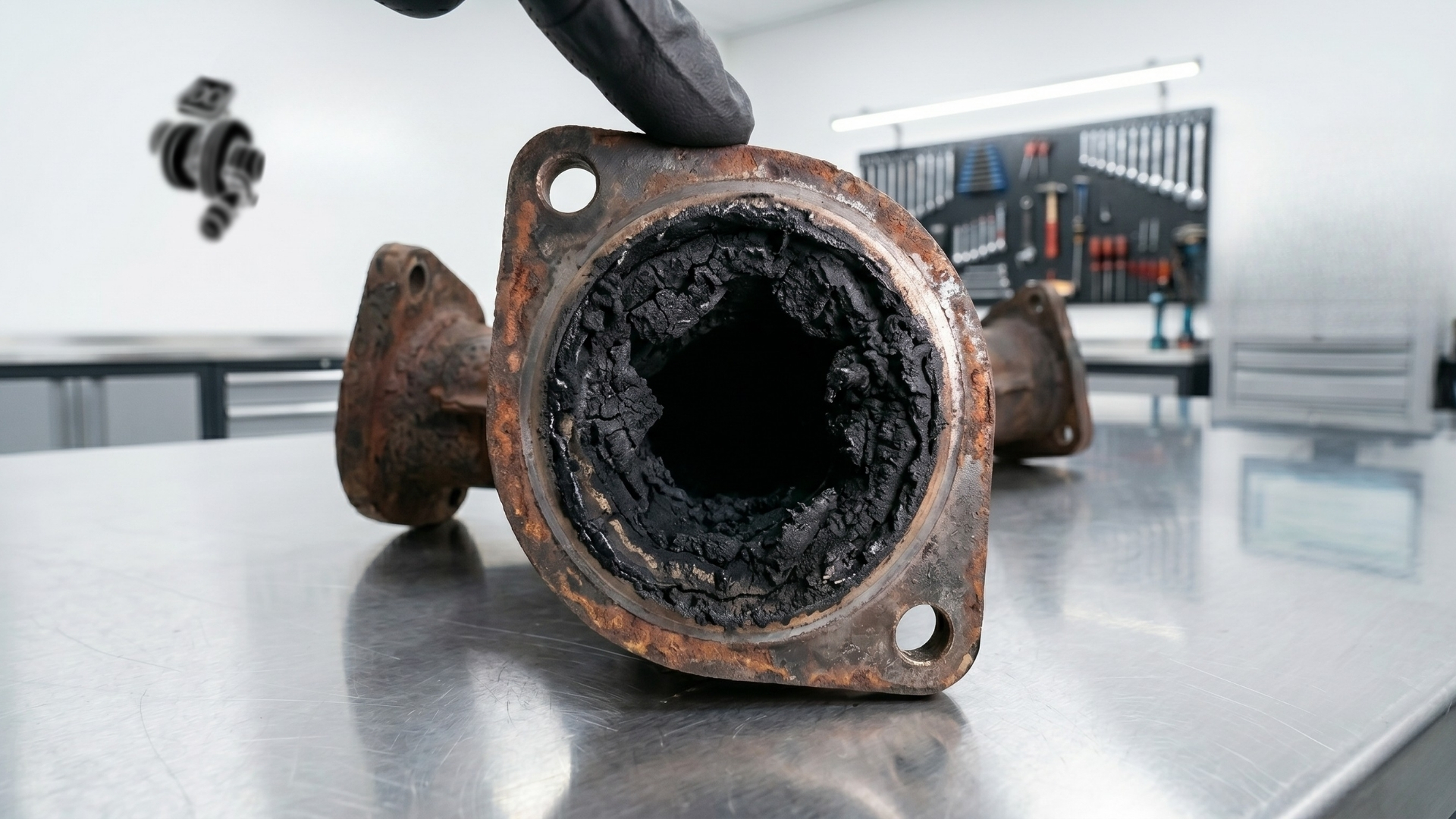
Additionally, because these E150 models are getting older, their EGR (Exhaust Gas Recirculation) valves are highly prone to clogging with carbon soot, choking the engine's intake manifold. During the tuning process, many owners choose to pair the Stage 1 remap with an EGR software delete to guarantee long-term engine cleanliness and reliability. You can read more about how EGR systems fail in our dedicated article: What is an EGR Delete?.
Conclusion
A Stage 1 software calibration is the single most cost-effective upgrade you can perform on your Toyota Corolla E150 D-4D. It modernizes the vehicle's drivability, improves throttle response, unlocks massive towing/overtaking torque, and can even save you money at the pumps.