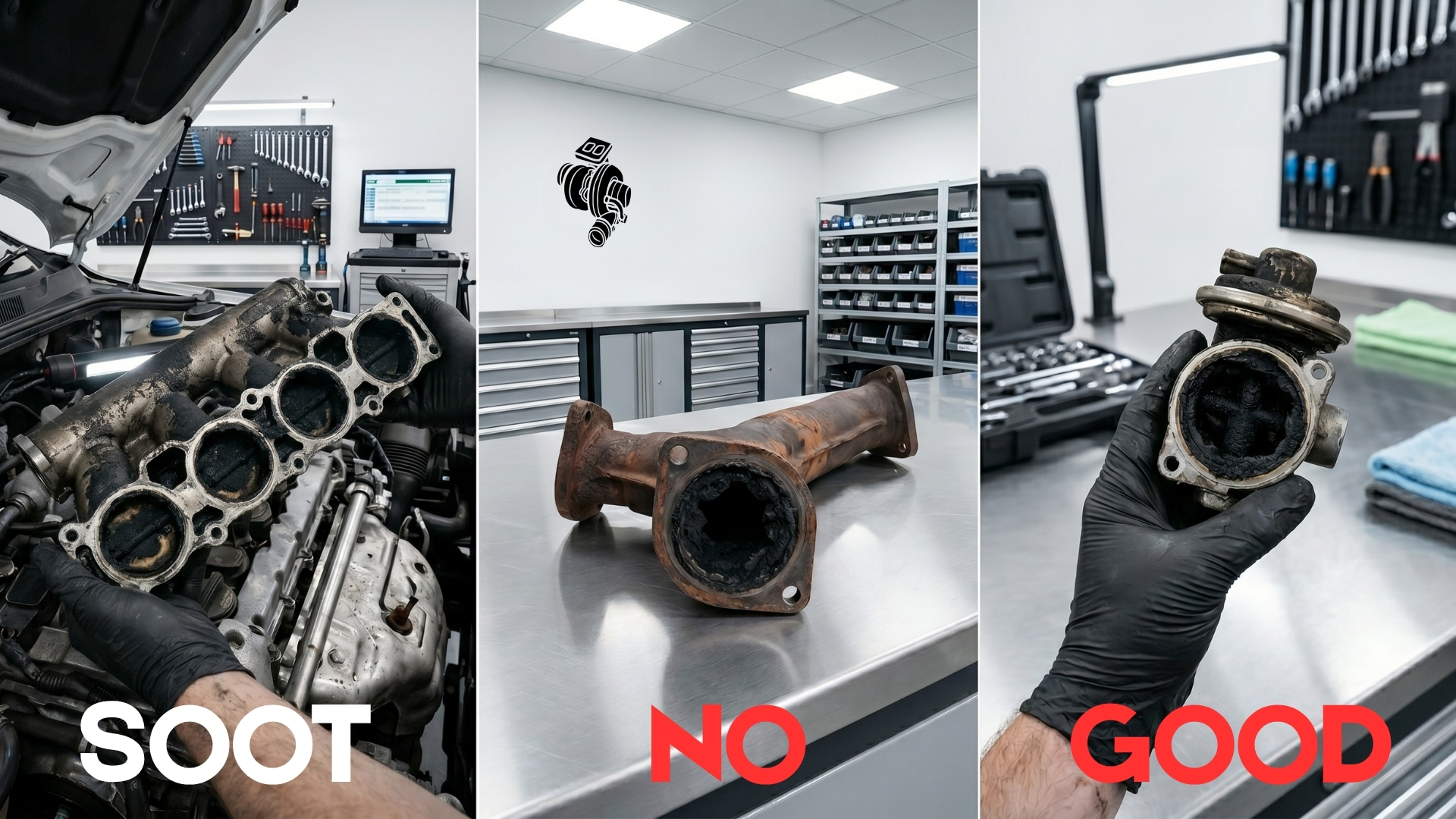
An EGR delete is a modification that physically blocks or removes the Exhaust Gas Recirculation (EGR) system and updates the ECU software to stop the engine from recirculating hot, dirty exhaust gases back into the intake. While designed for emissions, EGR systems cause heavy carbon soot buildup that chokes the engine over time. Performing an EGR delete restores airflow, increases reliability, improves fuel efficiency, and prevents costly intake manifold repairs.
If you own a modern turbo-diesel vehicle, whether it's a hard-working bakkie like a Toyota Hilux or Ford Ranger, or a luxury diesel SUV, you have likely heard other owners talking about doing an **EGR delete**. If you've ever wondered what this modification actually does, why it is so popular, and whether it's right for your engine, you're in the right place.
While manufacturers install Exhaust Gas Recirculation (EGR) systems to meet strict global emissions regulations, they are notorious for causing long-term engine problems. In this comprehensive guide, we'll explain how the EGR system works, why it fails, what an EGR delete is, and how it protects your vehicle's engine and your wallet.
How the EGR System Works (And Why it is Installed)
EGR stands for Exhaust Gas Recirculation. As the name suggests, the EGR valve's primary job is to recirculate a portion of your engine's spent exhaust gases back into the combustion chambers via the intake manifold.
By replacing some of the oxygen-rich fresh air with inert exhaust gas, the combustion temperature inside the cylinders is lowered. Because nitrogen oxides (NOx) are formed under extreme heat, lowering combustion temperatures reduces the amount of NOx emissions coming out of the tailpipe.
On paper, this sounds like a clever environmental solution. However, in practice, feeding dirty, soot-filled exhaust gas back into a diesel engine is a recipe for mechanical trouble.
The Major Problem: Carbon Clogging and Soot Build-up
To understand why diesel owners choose to delete their EGR valves, we only need to look at what happens inside the intake manifold over time. Diesel exhaust gas is filled with thick, black carbon soot. Meanwhile, modern engines also recirculate oily vapor from the crankcase (via the PCV system) back into the intake.
When the wet oil vapor meets the hot, dry carbon soot, they mix to form a sticky, tar-like carbon sludge. This sludge clings to the walls of the intake manifold, the EGR valve itself, and the intake ports on the cylinder head. The image below shows exactly what this carbon choking looks like:
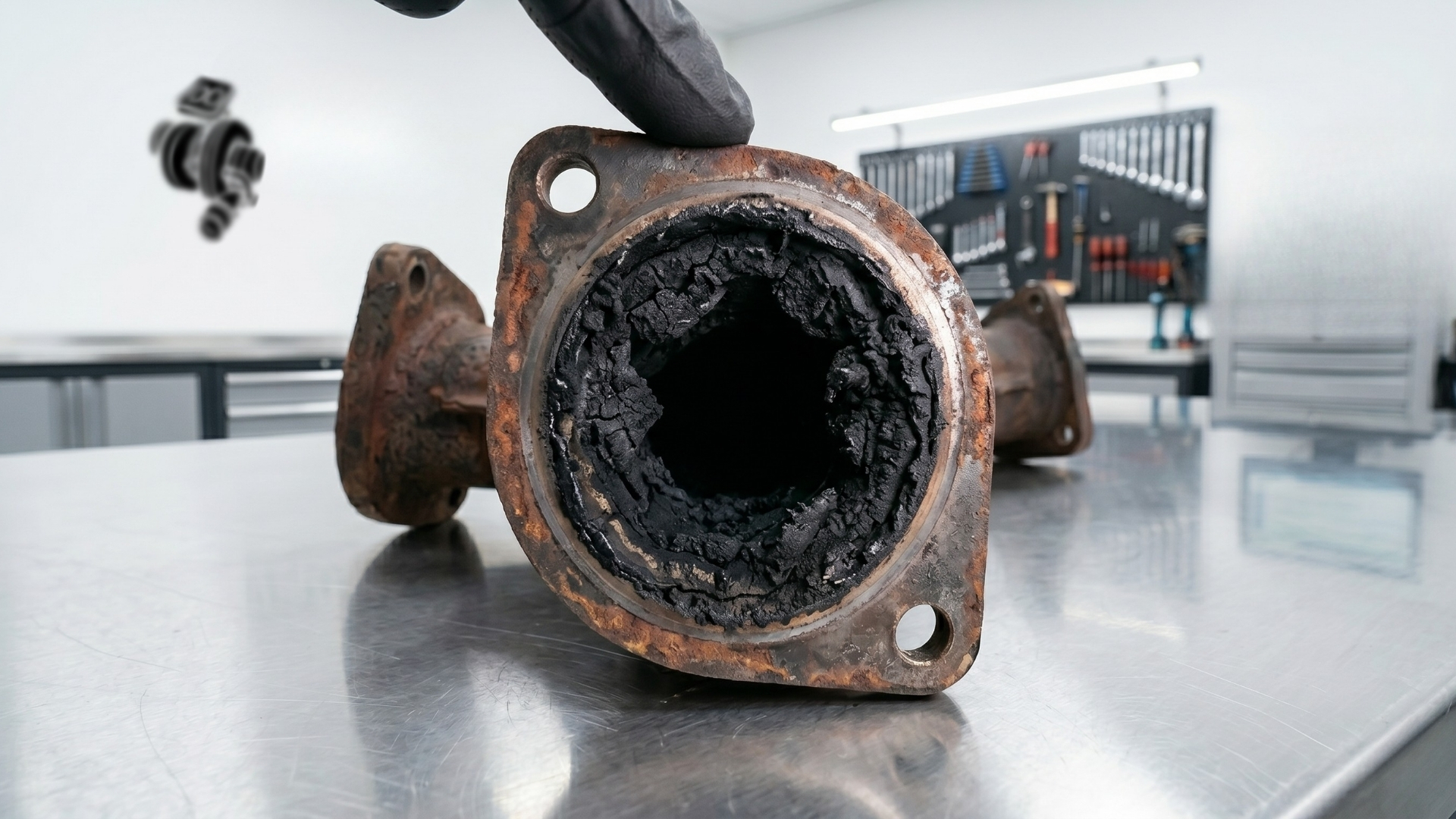
As this carbon sludge layers up, it restricts the airflow into your engine. It is the automotive equivalent of trying to run a marathon while breathing through a straw. The consequences of this clogging include:
- Loss of Power and Throttle Response: Because the engine is choked of fresh air, it cannot burn fuel as efficiently.
- Reduced Fuel Economy: The engine has to work harder to achieve the same performance, burning more fuel in the process.
- EGR Valve Stuck Open/Closed: The carbon build-up physically jams the valve, triggering the "Check Engine" light and putting the vehicle into limp mode.
- Turbulence and Rough Idle: Restricted intake ports cause uneven air delivery to the cylinders, leading to rough idling, shuddering, and engine hesitation.
What is an EGR Delete?
An **EGR delete** is a performance and reliability modification that completely disables the EGR system, ensuring that the engine only breathes 100% clean, fresh air. It consists of two essential parts:
1. The Physical Modification (Hardware)
To physically block the exhaust gases from reaching the intake manifold, blanking plates are installed. In some cases, the entire EGR valve assembly and the EGR cooler are completely removed from the engine bay, and bypass pipes are installed. This physically closes off the path from the exhaust manifold to the intake.
2. The ECU Software Disable (Tuning)
If you only block the EGR valve physically, the vehicle's computer (ECU) will immediately detect that the air mass flow rates are incorrect and that the valve is not responding. This will instantly throw a fault code, illuminate the engine light on your dashboard, and often force the vehicle into a low-power "limp mode".
To prevent this, a professional tuner edits the ECU's software maps. We electronically disable the EGR operation, telling the ECU to keep the valve closed and disabling any diagnostic trouble codes (DTCs) related to the EGR system. This ensures the car runs perfectly, safely, and without warning lights.
The Benefits of an EGR Delete
By blocking the recirculation of exhaust gases and calibrating the ECU software correctly, diesel owners enjoy several massive benefits:
1. Ultimate Reliability & Longevity
Since only clean air is entering your intake, the carbon clogging process stops completely. Your intake manifold remains clean, intake valves don't stick, and you eliminate the risk of hard carbon chunks breaking off and falling into the cylinders, which can cause catastrophic engine damage.
2. Lower Exhaust Gas Temperatures (EGTs)
Contrary to what some believe, recirculating hot exhaust gases back into the engine actually increases overall engine combustion chamber temperatures under high load. An EGR delete allows the engine to run cooler, protecting your cylinder head, pistons, and turbocharger from thermal stress.
3. Better Performance & Fuel Economy
Clean, cool air is denser than hot exhaust gas. Cooler air contains more oxygen, allowing for a cleaner and more efficient combustion cycle. This sharpens throttle response, improves low-end torque, and typically results in a 5% to 10% improvement in fuel economy, especially on long-distance highway trips.
4. Significant Cost Savings
When an EGR valve or its associated cooler fails, the replacement parts alone can cost upwards of R10,000 to R25,000 depending on the vehicle. Because replacing them is only a temporary fix (they will clog up again), an EGR delete is a highly cost-effective, permanent solution that prevents future breakdowns.
The South African Context: Diesel Quality and Bakkies
EGR failures are exceptionally common in South Africa, and there are two main reasons for this:
1. Variable Diesel Quality
While European and American markets run on ultra-low sulfur diesel (10ppm or lower), South African drivers often have to fill up with 50ppm or even 500ppm diesel in rural areas. Higher sulfur content in diesel fuel leads to higher soot production during combustion. This accelerated soot production means South African bakkies clog up their EGR systems significantly faster than vehicles operating in Europe.
2. Heavy Towing and Off-Road Work
Bakkies like the Toyota Hilux GD-6, Ford Ranger, and Isuzu D-Max are workhorses. They tow heavy trailers, carry loads, and drive in hot, dusty off-road conditions. Under sustained heavy loads, a failing or clogged EGR valve can cause exhaust gas temperatures to spike dangerously, leading to cracked pistons or turbo failure. Doing an EGR delete keeps the engine running cooler and breathing clean, even under maximum workload.
Conclusion: Is an EGR Delete Right for You?
If you want to maximize the lifespan of your diesel vehicle, prevent expensive intake cleaning bills, and ensure that your engine runs as efficiently and reliably as possible, an EGR delete is one of the best modifications you can make. It is typically combined with a custom **Stage 1 ECU Remap** to unlock stronger torque, smoother power delivery, and better overall drivability.
At Superflow Performance, we specialize in professional, software-based EGR deletes combined with physical blanking. We calibrate the ECU to disable the EGR system correctly, ensuring complete reliability and zero warning lights.