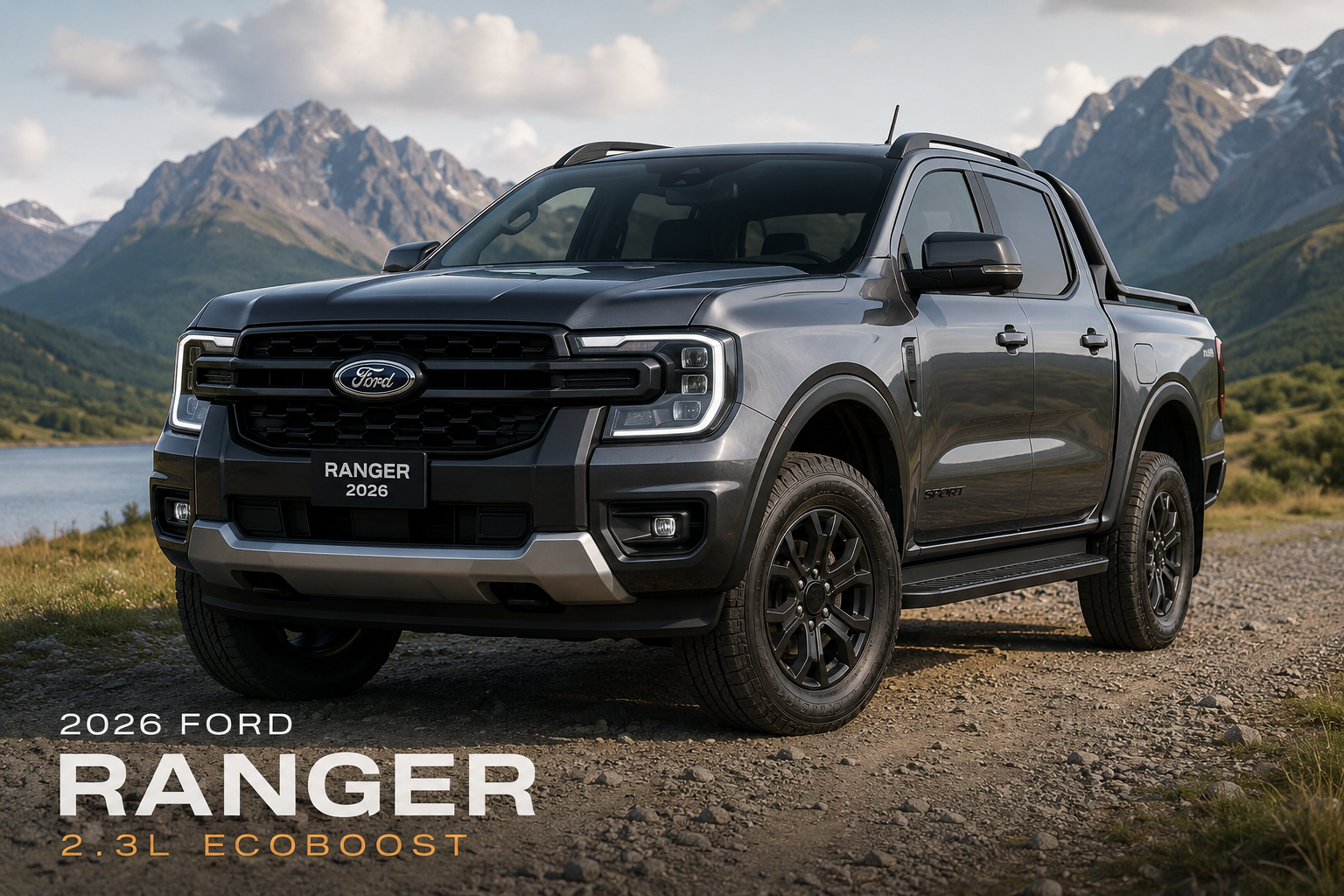
The next-gen Ford Ranger 2.3 EcoBoost petrol is an absolute gem of a bakkie, sharing its engine roots with high-performance Ford models. In this post, we explain how a custom Superflow Stage 1 ECU software calibration pushes it from the factory 222kW and 452Nm up to a sports-car-rivaling 244kW and 522Nm. Learn why petrol turbo remapping requires meticulous datalogging to get running safely under South African driving conditions.
While South Africa is traditionally a diesel-bakkie market, Ford threw a brilliant curveball with the release of the next-generation Ranger 2.3 EcoBoost. This four-cylinder turbocharged petrol engine—which shares its core architectural DNA with the iconic Ford Mustang and Focus RS—is a smooth, high-revving powerhouse that has gained a massive following among drivers who want immediate throttle response and petrol refinement.
Straight from the assembly line, the Ranger 2.3 EcoBoost pushes out a solid 222kW (298 HP) and 452Nm. However, because it is a factory-restricted turbocharged petrol vehicle, it is one of the most responsive platforms for ECU software calibration. A custom Stage 1 remap safely transforms this capable bakkie into an absolute rocket without requiring any physical engine modifications.
The Numbers: Stock vs. Superflow Stage 1 Calibrated
Tuning a direct-injection petrol turbo engine like Ford's 2.3L EcoBoost requires extreme precision. We adjust boost pressure, ignition timing, and throttle mapping to deliver progressive, linear power. Here are the dyno-verified gains:
Ranger 2.3 EcoBoost (2023 - Present)
Why Petrol Turbo Tuning Requires Meticulous Datalogging
Unlike diesel engines, which are heavily fuel-restricted, petrol turbocharged engines are limited by knock limits, cylinder temperatures, and octane levels. South African 95-octane pump fuel is highly susceptible to heat-induced detonation (knock), especially under heavy load at high altitudes like Gauteng or in the blistering heat of the Bushveld.
At Superflow Performance, we never upload a file without verifying it. We use state-of-the-art on-road datalogging to monitor critical engine metrics in real-time:
- Ignition Correction & Knock: We monitor the ignition timing across all cylinders to ensure there is zero knock activity, keeping your pistons safe.
- Air-Fuel Ratios (AFR): We keep the fueling ratios perfectly optimized, ensuring clean combustion and running the engine slightly rich at high RPMs to keep cylinder head temperatures cool.
- Wastegate Duty Cycle & Boost: By logging boost pressure alongside wastegate activity, we verify that the turbocharger operates comfortably within its design efficiency window, avoiding over-speeding or boost spikes.
This scientific approach to tuning means your next-gen Ranger doesn't just make more power—it keeps that power safely, cleanly, and reliably, whether you are daily driving, off-roading, or towing a heavy boat down to the coast.
The Driving Dynamics: What to Expect
With an extra 70Nm of torque available much earlier in the rev range, the Ranger's 10-speed automatic gearbox operates with far more fluid efficiency. Instead of dropping down three gears to accelerate, the engine relies on its new-found low-end boost to pull you forward. The notorious off-the-line throttle lag is eliminated, making pull-offs and quick overtaking maneuvers incredibly responsive and smooth.
Conclusion: High-Performance Bakkie, No Compromises
The next-generation Ford Ranger 2.3 EcoBoost is an outstanding pickup, but a Superflow Stage 1 calibration makes it feel like a sports bakkie. By safely unlocking 244kW and 522Nm, we deliver an incredibly engaging, powerful driving experience while protecting the long-term reliability of your engine through meticulous, data-driven calibration.